Нова українська школа: методика навчання англійської мови у 3-4 класах закладів загальної середньої освіти на засадах компетентнісного підходу - Крістіна Карпюк 2020
13. Activities and Management
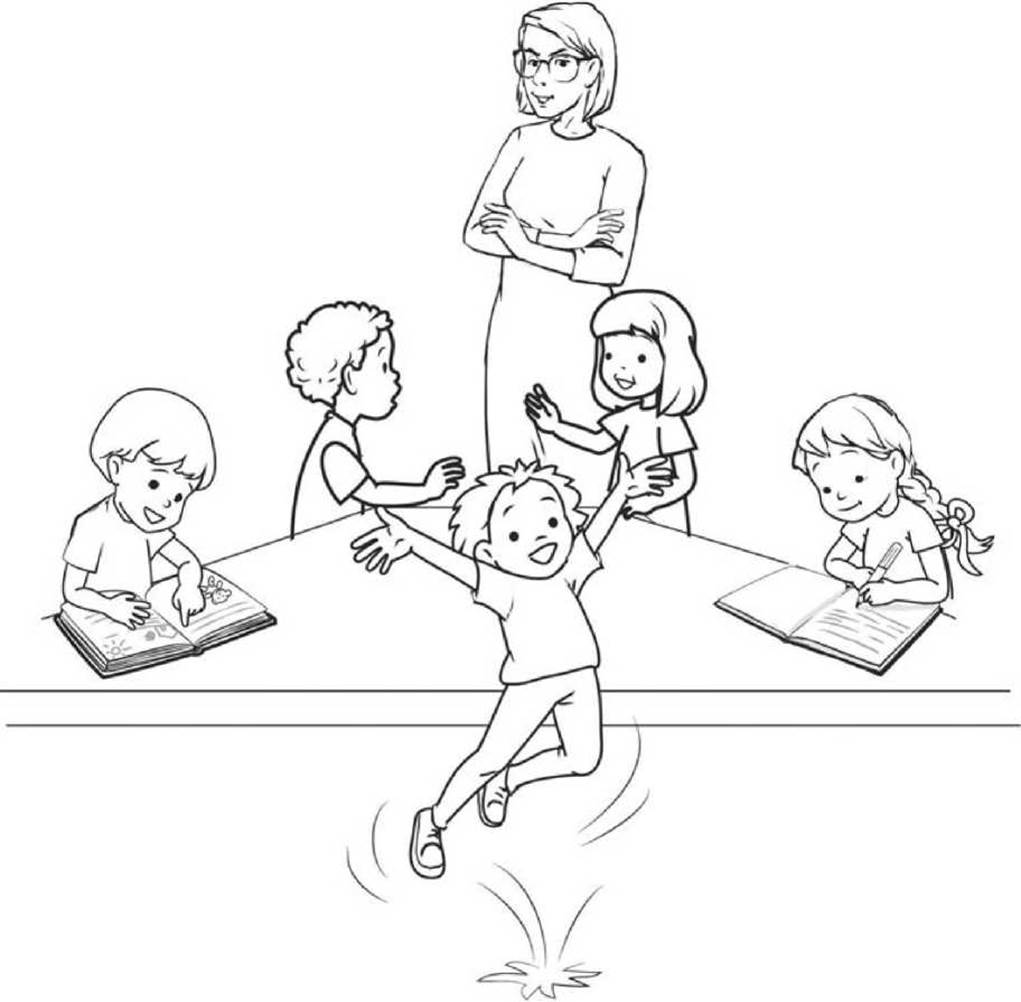
According to Scrivener (2011), the basic block of any lesson is the activity or task. This is because they activate our students’ knowledge and skills during the lesson. The two main objectives of any activity/task are studying a certain language aspect and the result which will then be discussed and evaluated. «A good task produces good learning: from the teacher’s point of view, this is the major criterion for its evaluation» (Ur, 2012: 43).
Activities and tasks are usually differentiated by their purposes - to start/end a lesson, to activate or settle down the students and so on, as well as by the language aspect they are made to develop - listening, speaking, reading, writing, grammar, vocabulary. In addition, activities can be communicative which, in turn, are divided into:
1 Functional communicative activities which improve the students’ ability to find the appropriate grammatical and lexical item(s) with the intention to express a certain meaning in a particular situation.
2 Social interaction activities which develop students’ ability to measure the functional aspects of English with its social ones with the intention to choose the language item which is not only functionally effective but is also appropriate in the given social situation.
When designing an activity or task, there are some practical principles which need to be considered in order to make everything work:
Validity - an activity should, first of all, stimulate learners to actively use the language items or skills which it is made to teach/develop.
Quantity - the more pupils practise English in an activity, the more likely they will learn.
Success orientation - certainly errors and mistakes are obvious to happen, but students should learn from them to make things right next time; thus, teacher’s correction should take place but in an appropriate form and at an appropriate time.
Heterogeneity - a good activity gives learners opportunities to take part in it at different levels of proficiency within a class.
Interest - any activity should meet students’ not only age and level but also interests; therefore, it enlarges their motivation, they are more likely to stay on-task which, in turn, leads to better results.
The more fully occupied the students are in purposeful learning activity, the more likely they are to cooperate and work well. Boredom is a key cause of discipline problems.
Penny Ur, 2016
However, the success of the activity does not only depend on its design. Another important aspect is the way how it is being run. This brings us to:
Instructions -
✵ class attention - everyone should be listening to the teacher when he/she gives them instructions;
✵ repetition - some instructions should be repeated for better understanding or to remind everyone what to do and how to do it;
✵ brevity - instructions should be as short as possible, since young learners are usually unable to listen for very long;
✵ examples - these should always be provided in order for students to better understand the task and the expected results;
✵ checking understanding - this always should take place after the instructions are given in order for the task/activity to be appropriately done and lead to the expected results.
Ongoing support - it is necessary for the teacher to support his/ her students during the task/activity and provide them with help when needed in order for them to succeed.
Feedback -
✵ showing appreciation for the results which is one of the ways to motivate students to achieve even better results;
✵ summarising and evaluating the results to show the students what they have achieved as well as to come to certain conclusions for the teacher in order to see what went right/wrong which will then help to make the next activities better.
Here are some other practical tips about tasks and activities:
1 Plan your instructions beforehand and make sure they are not only short but also clear and given in simple English (you can also make them visual for better understanding, by applying pictures, gestures, mimics).
2 Provide your students with the instructions before handing them the materials because some young learners may transfer their attention from you to the ’interesting tools’ you have given them.
3 Count how much time each activity is likely to take and note it in your lesson plan in order to get everything done by the deadline.
4 Warn your pupils in advance when you are going to stop the activity.
5 Always have reserved activities with you because some students may finish earlier than others.
6 Since our students are young learners, use games - learning English in a playable form.
A significant part of any task/activity is its management and interaction - the way in which students work.
Whole-class activities get everyone involved and build the ’class spirit’. They are appropriate when explaining things and keeping everything under control. However, they are unsuitable when the aim is to develop students’ speaking, since not all students are willing to talk in front of everybody or there may be a lack of time to listen to everyone because of the time limits.
Solo activities are designed to make pupils work on their own which develops their self-dependence. However, too much solo work may interfere in developing cooperation in class.
Pairwork greatly enhances the amount of time to do speaking for each learner and improves their autonomy, too. However, such activities are often noisy and students may go off-task.
Groupwork also enlarges the time for each student to talk as well as develops class cooperation. Activities involving groupwork are often time-saving and are appropriate when the task is big. However, just like the previous one, they can get noisy and this can distract students from work.
Teachers can pair up and group their pupils with the people they are sitting with, by choosing their partners or by letting their students choose their partners themselves, by the alphabet according to the pupils’ names or by using some devices like spin-offs or cards with their names.
In any case, the management of the task depends on its aim. Speaking activities are better done in pairs/groups, projects and drawings can be done with a partner(s) or solo, explanation of the new material should be in a ’whole-class’ shape, etc. A good teacher chooses a variety of ways to manage the class according to the type of the task/activity in order to make the lesson more productive and interesting, involve all students in work and develop students’ cooperation along with their autonomy and self-dependence.
SUMMARY
Activities and tasks are the basic parts of any lesson. They are divided according to the language aspect they should develop - listening, speaking, reading, writing, grammar or vocabulary as well as to their aims (to start/end a lesson, to activate or settle down the students, etc). They can also be communicative, thus, improving the students’ ability to socialise and use the appropriate grammar and lexis in a particular situation. In order to create a good task, we need to consider its validity, quantity, success orientation, heterogeneity and interest. The instructions should be simple, short, clear and given in English. Students should be provided with teacher’s support during the activity itself and in the end everything should be summarised and evaluated with the intention to see whether the results are or are not what we have expected and why. This helps teachers to come to conclusions and decide what to do to make the next task better. Management plays a significant role in learning English because each type of interaction (whole-class, solo, pairwork/groupwork) helps to develop a different quality of a student and, therefore, should be chosen according to the goal of the activity or task.