Англійська мова розробки уроків та методичні рекомендації - Нова українська школа - 2021
Пори року. Seasons
Мета: повторити та активізувати ЛО теми; удосконалювати фонетичні, лексичні та граматичні навички учнів; розвивати увагу та пам’ять; виховувати любов до природи та вчити сприймати красу кожної пори року.
Обладнання: картки для самостійної та групової роботи; тематичні картинки; аудіозаписи; робочий зошит.
Хід уроку
І. Підготовка до сприйняття іншомовного мовлення.
1. Привітання.
T: Hi, boys and girls!
Ps: Good morning, teacher!
T: Nice to meet you!
Ps: Nice to meet you.
T: How are you?
P1: I’m fine, thanks.
P2: O’K, thank you.
2. Повідомлення мети та теми уроку.
Тему уроку учні мають розгадати («А secret word»)
На дошці зображені пронумеровані квадрати. Учні отримують набори з алфавітом з пронумерованими літерами і ,відповідно до номерів, мають назвати закодовані літери.

T: Look at the blackboard, please. Can you see a secret word? Let’s try to guess what word is coded?
Учні називають літери і вписують їх у відповідні квадрати.
Т: Right you are! «SEASONS». This is the theme of our lesson. So, today we are going to talk about seasons of a year, we’ll review the names of all months of a year, make up sentences about your favorite seasons and what you like to do. We’ll also play games do some interesting tasks.
3. Phonetic drill (фонетична розминка)
T: Children, I suppose, you remember a poem about the seasons? Let’s refresh it in your memory. (Постер з віршиком на дошці)
Some pupils read the poem.
II. Основна частина.

T: How many seasons are there in a year?
Ps: Four.
T: Name them please.
Ps: Winter, spring, summer, autumn.
1. Закріплення граматичного матеріалу
(Використання граматичних структур «best of all» та вживання модального дієслова «can»)
T: All seasons are nice, but I like summer best of all. What season do you like best of all?
Учні складають власні речення, користуючись зразком:
I like … best of all.
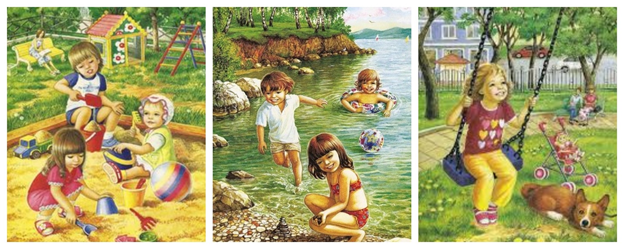
T: And now, children, will you tell me what you can do in different reasons?


а) Розглянувши картинки з різними видами діяльності, учні складають речення, використовуючи модальне дієслово «can», «can’t», користуючись таблицею:

b) Гра «You move, we guess».
Учень отримує картку із зображеною на ній дією, яку мусить продемонструвати, решта має здогадатися, що це за дія та побудувати речення за зразком:
He (She) can … in spring (autumn, winter, summer)
2. Робота з картками (Writing activity).
а) Find and circle the odd-word:
· Sunday, summer, autumn, spring.
· April, May, December, March.
· Warm, windy, cold, green.
· Ski, swim, pick up berries, sleep.
· Rain, car, sun, snow.
b) Fill in the gaps using the words in the box:
Leaves, autumn, holidays, snow, rains, first
· December is the … winter month.
· It often … in autumn.
· The trees are white with …
· There are a lot of fruit and vegetables in …
· The … are green in spring.
· Children have … in summer.
3. Аудіювання.
Учні отримують картки з твердженнями про різні пори року. Під час слухання вони мають вказати якої пори року стосується кожне із тверджень.
· It’s very frosty. (winter)
· The birds sing songs in the trees. (spring)
· The children have the longest holidays. (summer)
· The weather is often foggy and rainy. (autumn)
· In September the school starts. (autumn)
· The sun shines brightly and it’s very hot. (summer)
· They can skate and sledge. (winter)
· The snow melts and there is much water in the street. (spring)
III. Заключна частина уроку.
Our lesson is over. Your home task will be to prepare a short report about your favorite season.
Підсумок уроку.
Teacher asks:
· What have we learnt today?
· Was it difficult/easy?
· What did you like more?
T: I’m satisfied with your work today. You were so smart! Thanks a lot. Good bye!