Нова українська школа: методика навчання англійської мови у 3-4 класах закладів загальної середньої освіти на засадах компетентнісного підходу - Крістіна Карпюк 2020
3. Conscious Learning and Acquisition
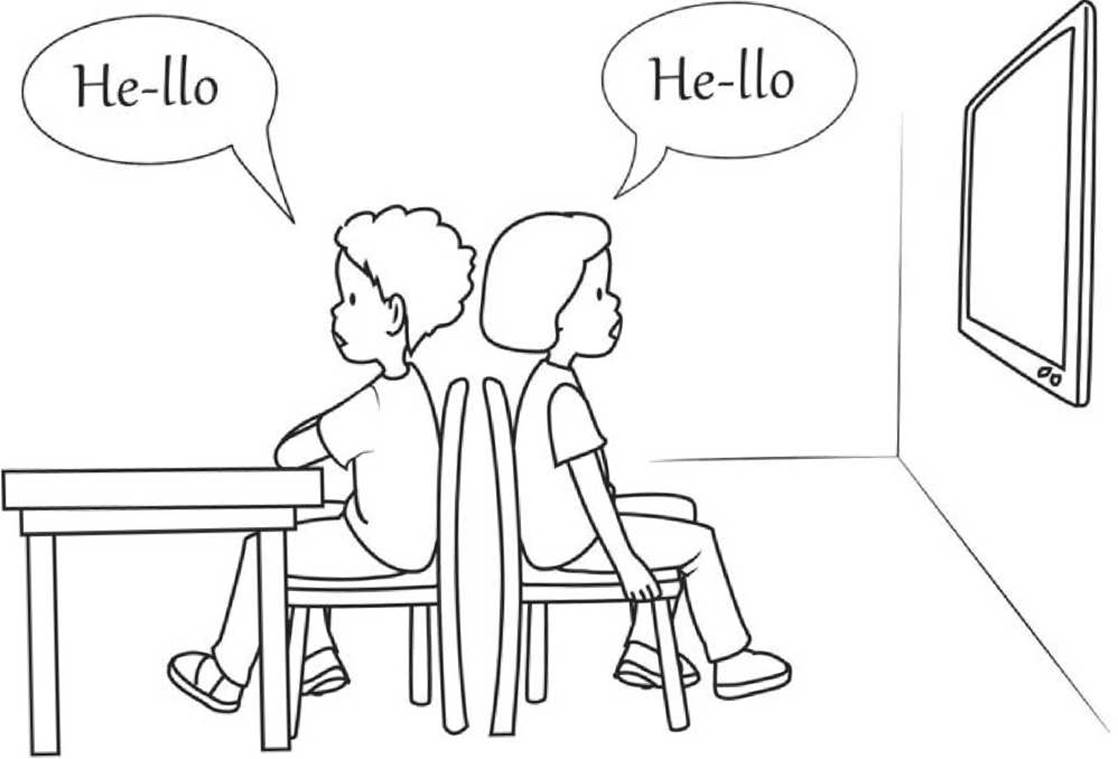
Learning a language and acquiring it - what is the difference? Both of these processes lead to the same result: knowing and being able to use a language. Yet, they are not the same.
Language learning is a conscious process of getting to know and use a language which usually happens in a classroom at school or at any other educational institution and it is followed by a teacher. In his book, Johnson (2017) mentions two characteristics of learning - ’error correction’ and ’rule isolation’. The first one takes place when students make mistakes and are then corrected by their teachers. The second one appears when a lesson (or a part of it) is focused on a particular point in grammar, pronunciation, vocabulary or in any other language aspect. The word ’isolation’ means that all language points in learning are dealt with one by one.
Acquisition, on the other hand, is a natural subconscious process of obtaining knowledge and skills in a language. Unlike learning, acquisition does not involve any conscious focuses on certain language points. In fact, it is known as ’picking up a language in a natural language environment’. Instead of using definitions or translation, children come to understanding words and phrases from what they see visually. Making mistakes cannot be avoided even here but, as a rule, they are not accompanied by correction. In fact, the more children hear and see the language, the better they remember how to say and write it correctly.
To make it shorter, learning is a conscious process where language items are studied and practised in turn, whereas acquisition is a subconscious and anxiety-free process of gaining a language. Both of them can be used in studying not only the mother tongue, but a foreign language, as well.
There is a common belief that if a person acquires a language, he/she will be able to use it fluently. This fact is true but not all people live or have a chance to live in a natural language environment. However, due to today’s globalisation, many native speakers come to live and teach abroad which means students have an opportunity to listen and talk to them in their own country. In addition, with the help of today’s advanced technology, learners can hear and see different foreign languages on the internet or by using special computer programmes created for that. Another way to compensate the natural environment problem is watching films/cartoons and reading books in foreign languages on a regular basis. Teachers themselves can provide their students with a natural language environment by speaking to them mainly in the target language, using less translation and more visual explanation, watching videos in that language and, finally, letting the students practise not only reading and writing it, but, first of all, speaking it (having live spontaneous conversations).
Most of children naturally pick up a language quite easily which explains the reason for learning it at a rather young age. In order for acquisition to take place, there are three things that need to be present:

It is possible for teachers to provide their young learners with these by creating a natural language environment in class mentioned earlier in this chapter and by considering their characteristics at this specific age discussed in the previous chapter.
SUMMARY
Learning a language and acquiring it are two important processes which have the same goal but are different in achieving it. The first one is conscious, involves rule explanation, different exercises and tasks, whereas the other one is more natural and automatic. Acquiring English is easier for children because their mental system is not fully formed yet which makes it flexible. This does not mean that teachers should not apply any exercises during lessons, though. Instead, it means that they should combine them with watching videos, having light talks, preferring more natural ways of explanation (pictures, for instance) to translation, omitting Ukrainian/Russian during lessons and using English as much as possible. That way, teachers create a natural language environment where learning is also present to some extent and, as a consequence, their students are more likely to become fluent users of English in the future.